
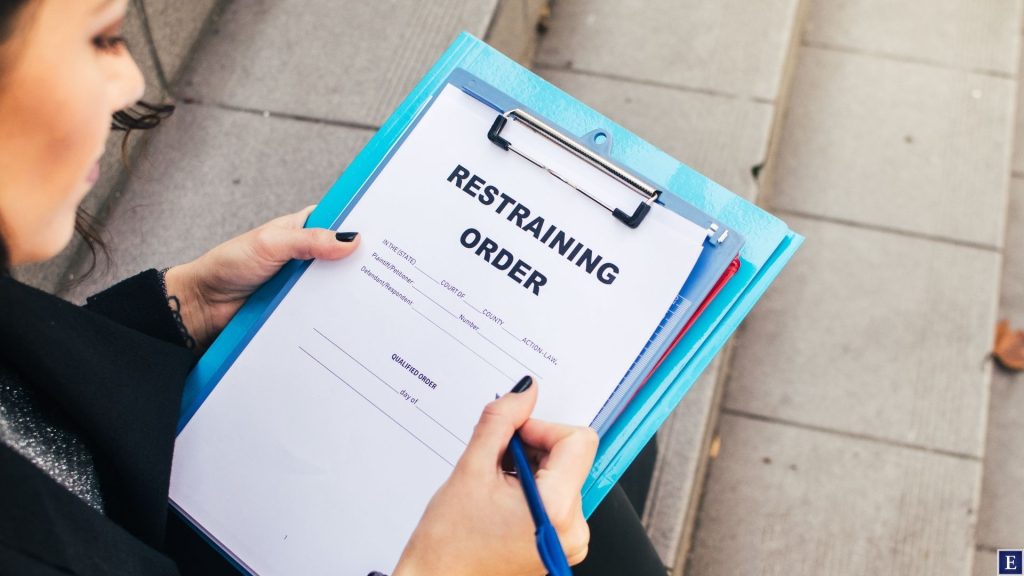
Under Family Code section 6211, domestic violence protection applies between people who share one of several specific relationships, not just married couples. You can ask for a restraining order against:
The law also defines abuse broadly. It covers hitting, pushing, or otherwise physically hurting someone, sexual assault, and behavior that places a person in reasonable fear of serious injury, even without physical contact. Threats, repeated unwanted contact, and stalking can support a restraining order on their own.
If any of this describes what you or your child has lived through, you likely qualify for protection, whether or not a single incident ever left a visible mark.
In Sacramento County, you can file domestic violence restraining order paperwork at the William R. Ridgeway Family Relations Courthouse on Power Inn Road or electronically through the court's eDelivery system. A judge can grant a temporary order the same day, based only on your written statement, without the other person present.
That order lasts until the scheduled hearing, where the other party can show up, respond, and present their side. The hearing is where most cases are decided, since a temporary order is meant to be short-term. An attorney can prepare you for what that hearing looks like.
This includes the details a judge tends to focus on and how to respond if the other side disputes what happened. Having someone who already knows how Sacramento's family courts handle these hearings can make the difference between an order that protects you for years and one that quietly lapses.
Violating a restraining order is its own crime under Penal Code 273.6, separate from whatever conduct led to the order in the first place. A first violation that causes no injury is a misdemeanor, punishable by up to $1,000 in fines, up to a year in county jail, or both.
If that same violation causes physical injury, the penalty can include a fine of up to $2,000, 30 days to one year in county jail, or both. A second violation within a year of an earlier conviction that causes injury can carry a jail term of at least 6 months. It can also be charged as a felony with the possibility of state prison.
None of this happens automatically. Violations must be reported, and the person accused of breaking the order still has the same right to a defense as in any criminal case. If the other party has already crossed the line your order set, tell the court and keep a record of when and how it happened.
Jason and Janet Ewing, a husband-and-wife team of attorneys, founded Ewing Law Group, PC and focus on family law in the Sacramento area. Jason A. Ewing has been licensed to practice in California since 2004. He is admitted to the U.S. District Court for the Eastern District of California.
He has also been a member of the Sacramento County Bar Association since 2006 and the Placer County Bar Association since 2012. Janet K. Ewing has been licensed since 2006. She is admitted to the U.S. District Courts for California's Eastern, Central, Northern, and Southern Districts, as well as the Ninth Circuit Court of Appeals.
She also provides free legal help through legal service programs run by Sacramento County and the courts. A Sacramento restraining order lawyer at our firm can walk you through what a judge will expect to hear at your hearing. We can also explain what kind of evidence tends to matter most.
No. You can ask the court for emergency protection on your own with a signed statement, and a judge can grant it the same day. Legal help becomes more valuable once the case reaches a hearing, where the other party can show up and contest what you are asking for. Speaking with a Sacramento restraining order lawyer before then gives you more time to prepare.
A temporary restraining order generally lasts about three weeks, which is roughly how long it takes to get a hearing date on the calendar. The order stays in effect the entire time, and violating it during that window carries the same consequences as violating a longer order.
An emergency protective order issued by police at the scene lasts only 5 to 7 days. It gives you enough time to go to family court and request a longer temporary order before the emergency order expires.
No, you don't need a police report. Your own written statement describing what happened can be enough for a judge to issue an order, though a police report can still help if one exists.
You can file domestic violence restraining order paperwork at the William R. Ridgeway Family Relations Courthouse at 3341 Power Inn Road in Sacramento, or electronically through the court's eDelivery system. There is no filing fee for a domestic violence restraining order request.
It can. A judge who issues a domestic violence restraining order has the authority to address temporary custody and visitation at the same time. A documented history of abuse is also something family courts weigh heavily in later custody decisions.
The judge hears from both sides and weighs the evidence, including any documents, messages, or witnesses you bring. A contested hearing is exactly where preparation matters most, since the outcome depends on how clearly you can show the pattern of behavior you are describing.
Yes, if you have dated that person, share a child with them, or are related by blood or marriage. If none of those apply, you may still qualify for a civil harassment restraining order instead, which covers people outside the relationships domestic violence law protects.
If you still have questions about which type of order fits your situation, contact our office, and we can talk it through with you.
You do not have to piece together the restraining order process on your own, and waiting can leave you without protection longer than necessary. A Sacramento restraining order lawyer at Ewing Law Group, PC can review what happened and help you decide which order fits your situation.
Contact us today to talk through what happened and your options from here.

